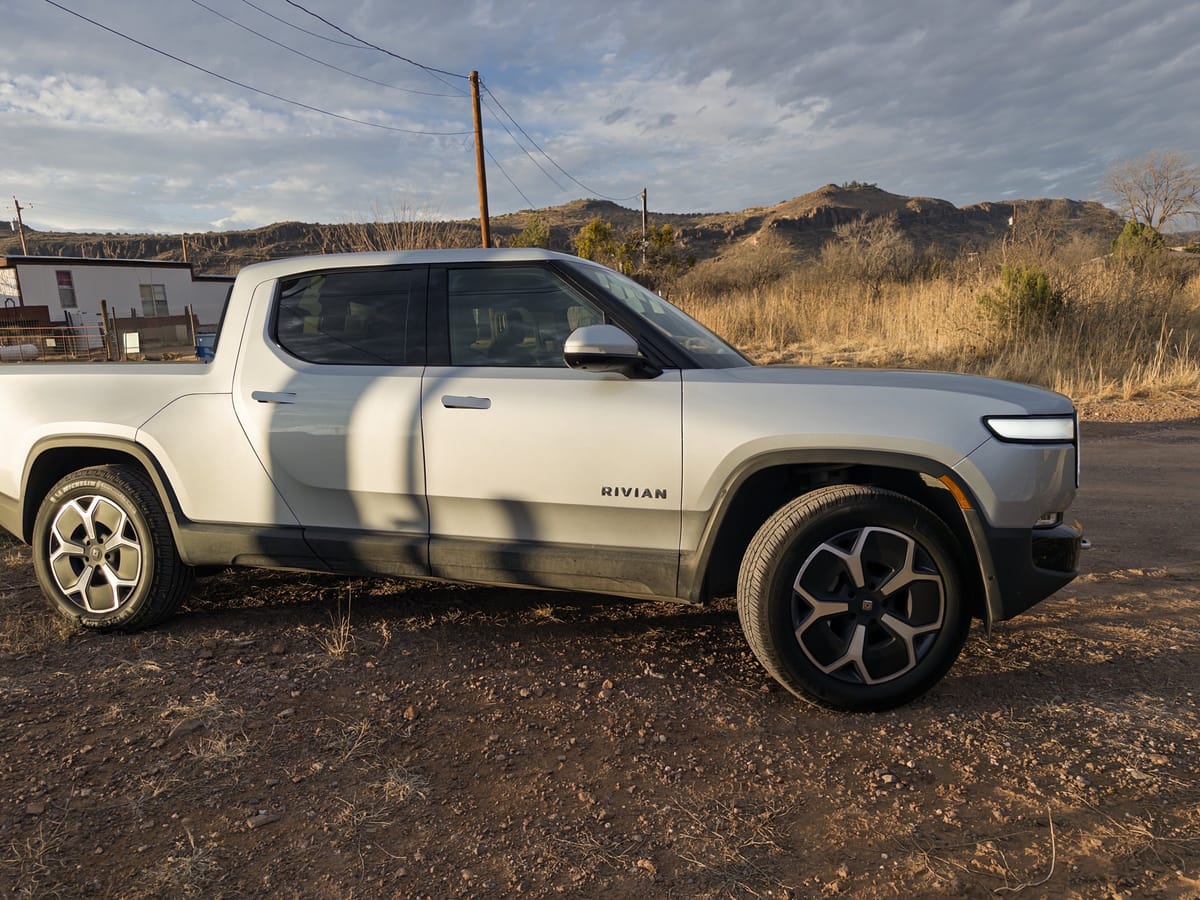
Being an outdoor lover, it's hard to get adventurous in Houston because it's just... flat. The closest we get to hills is our trips to Austin and San Antonio, but during the Presidents' Day long weekend, our friends invited us to beautiful West Texas, a place that has actual mountains, open desert, and charming mountain towns. We saw this as a perfect opportunity to take our Rivian R1T on an adventure.
I've been wanting to make this trip for a while. I had a big trip planned to Stardust Big Bend, an A-frame resort in Terlingua, Texas on the outskirts of Big Bend National Park, but we had to cancel because I got sick. I've had that itch to head out west ever since, and things finally lined up where we had the time and the EV infrastructure (more on that in a bit) to make it happen.
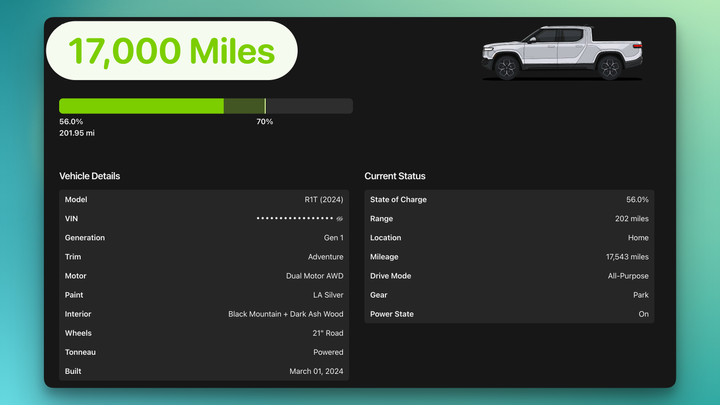
In this post I'll share a bit about the trip, what the planning was like, where we charged, and how we got around town. For this trip, we took my 2024 Gen 1 Rivian R1T Large Pack, which has 351 miles of range at 100%.
The Reality of Charging in West Texas
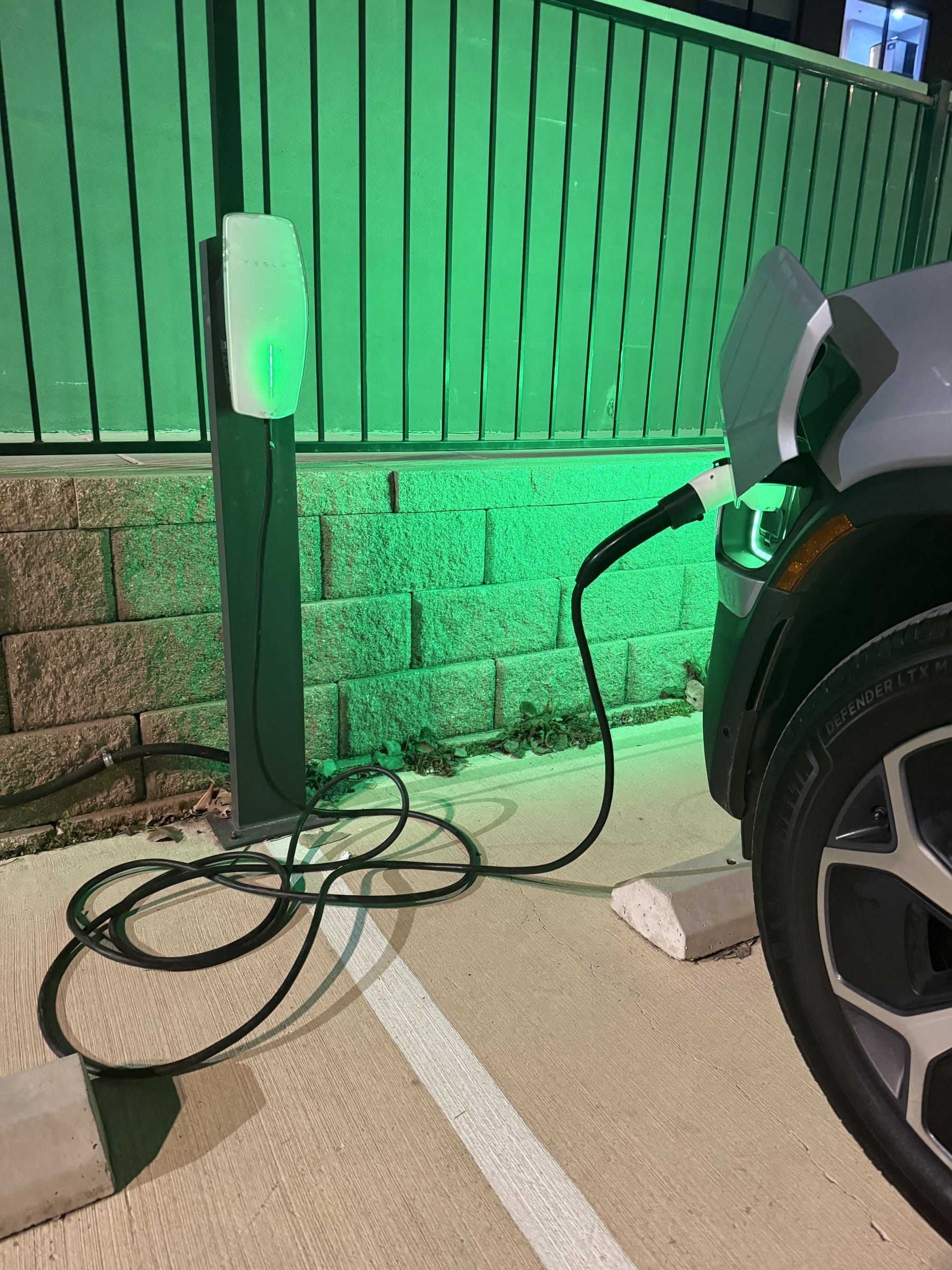
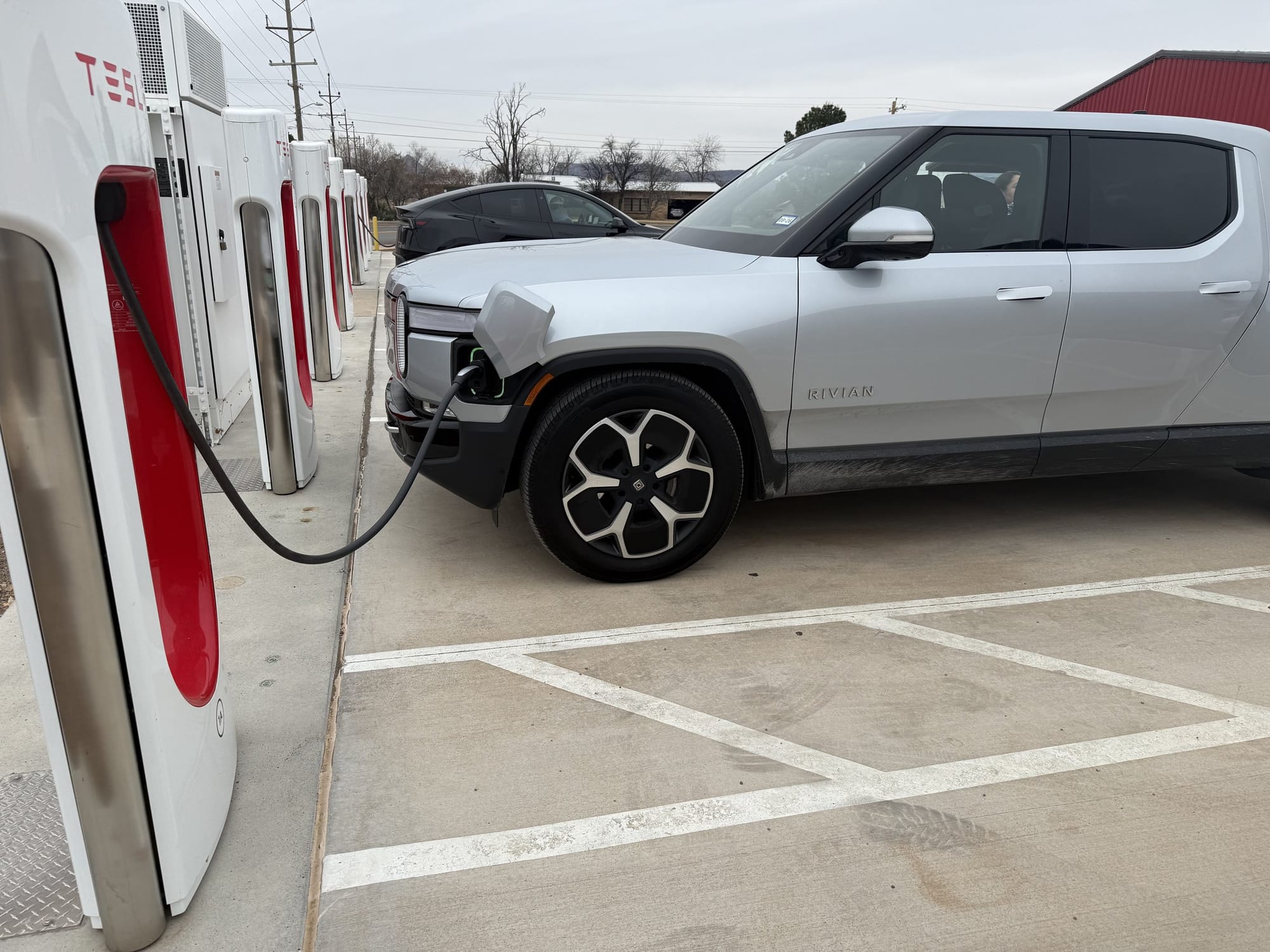
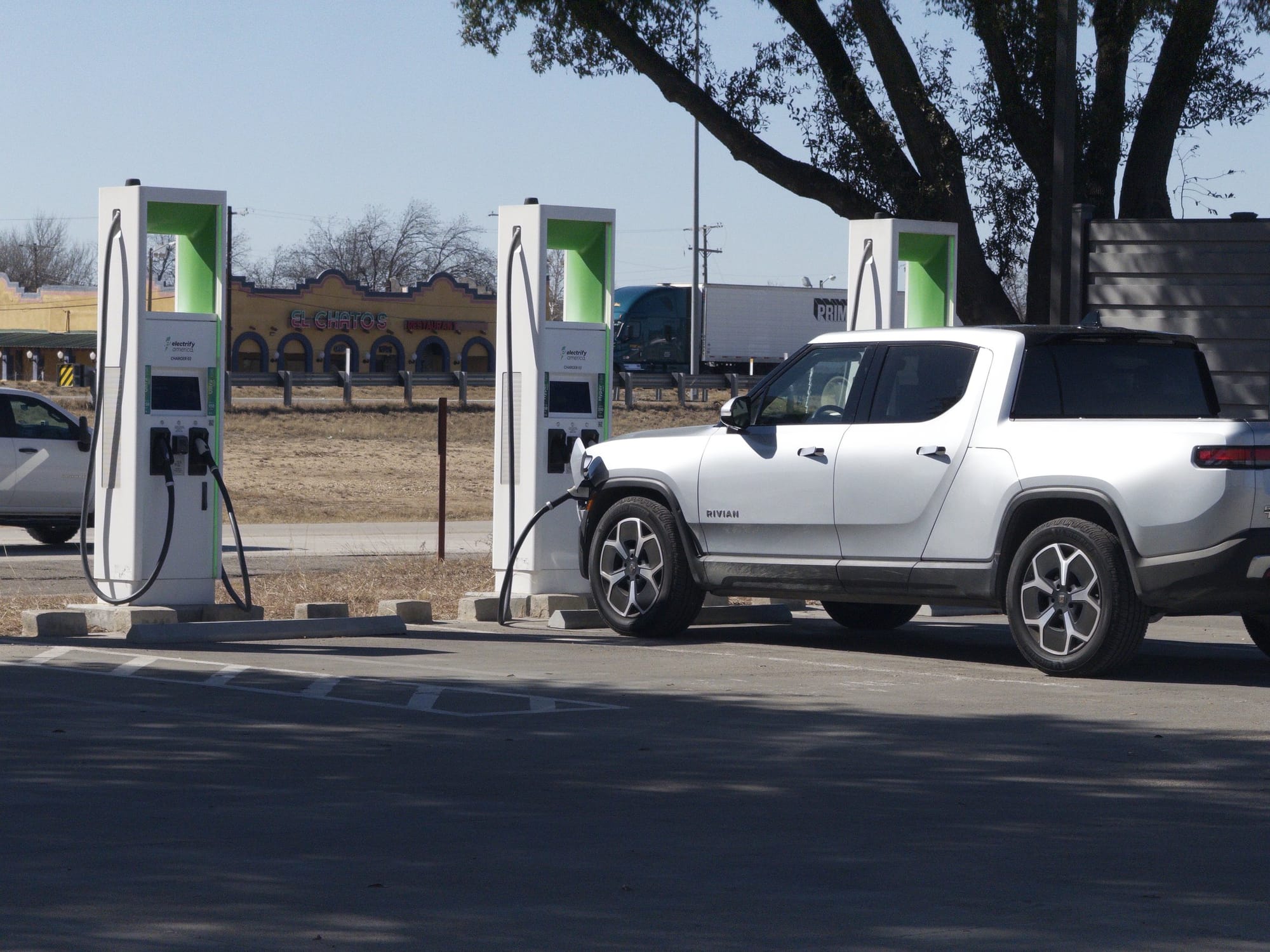
Before we get into the trip itself, it's worth setting expectations on charging, because West Texas is a different world compared to Houston.
Fort Davis has very limited options in town. There are a couple of J1772 chargers at Hotel Limpia and at McDonald Observatory, and you can find NEMA 14-30 and 14-50 outlets at RV sites if you look around. But in terms of fast charging, your real option is the Tesla Supercharger in Alpine, about 30 minutes away. We stopped there on the way in, took a long break, topped up, and that was enough to sustain our driving around Fort Davis, Marfa, and the surrounding area.
The contrast with Houston is pretty stark. Fast chargers have been popping up all over the city and along the corridors between Dallas, Austin, and San Antonio. A few years ago I still had to plan those trips carefully, but today I have plenty of options. That's not the case out here. The further west you go past I-10, the more scarce the charging infrastructure gets, and that's just the reality you need to plan around.
The key mindset shift is this: don't just think about how much range you need to get to your destination. Think about how much you need to get back, especially if your accommodations don't have charging. We got lucky on that front, but more on that below.
Route Planning and Charging Strategy
The drive from Houston to Fort Davis is about 9 hours of driving, plus charging stops. We took I-10 West and then cut south on Highway 67 towards Alpine.
We broke the drive into two days, which I'd recommend if you're traveling with kids. On the way out, our stops were:
- Buc-ee's in Luling, TX -- a good first break, clean bathrooms, easy on and off I-10
- San Antonio overnight – we stayed the night here and charged to 100% before heading out the next morning. This is the move. You wake up with a full truck and the rest of the drive is manageable.
- Tesla Supercharger in Ozona, TX – a good midpoint stop with a small at a Sonic, which gives you a chance to grab lunch
- Tesla Supercharger in Alpine, TX – our final top-up before arriving in Fort Davis
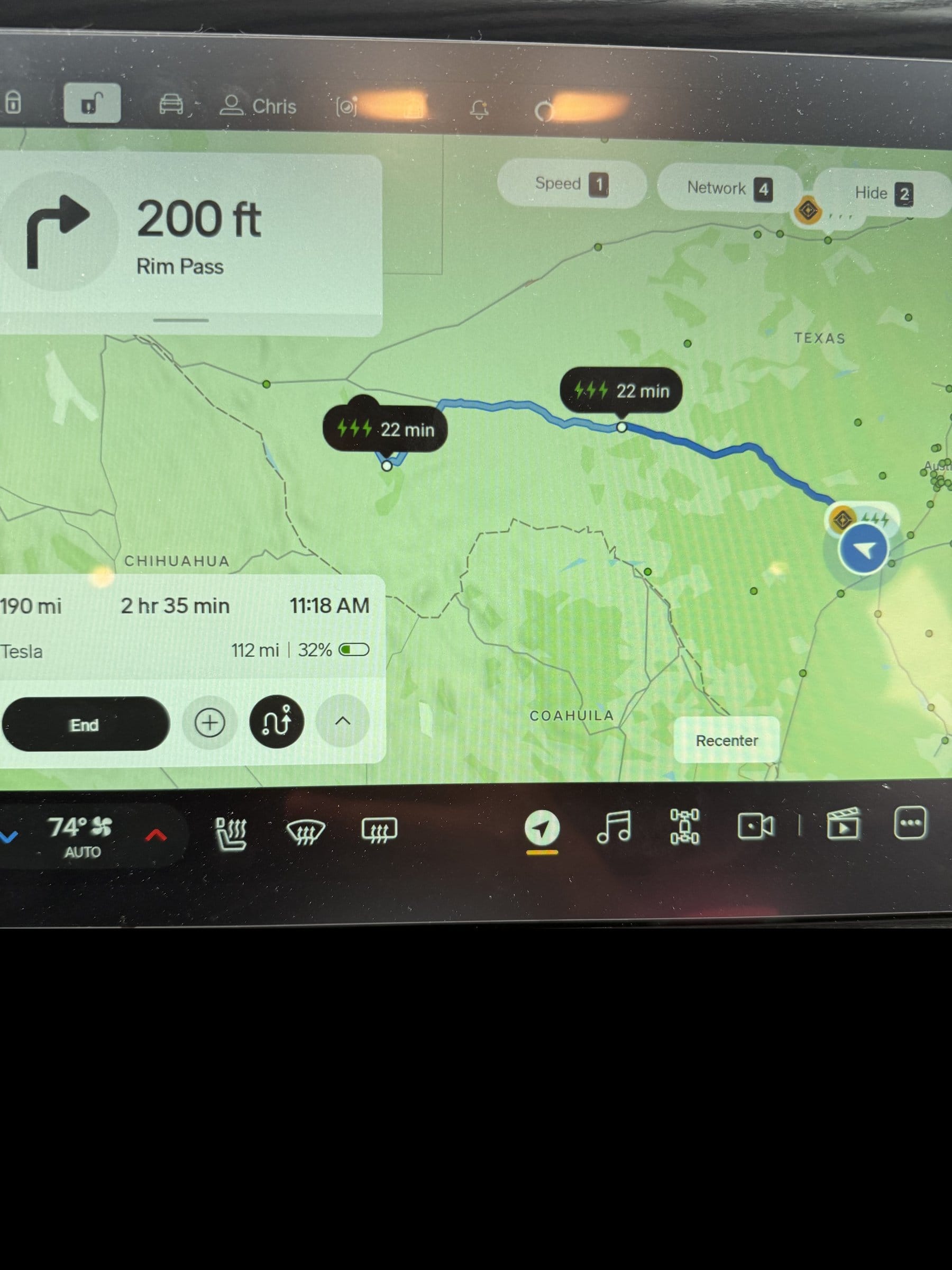
A note on speed and range: at 75-80 mph on I-10, your efficiency drops considerably. The 351 miles on paper is not what you'll actually get on the highway. Plan your stops around 200-250 miles of usable range and you'll stay comfortable. The stopping every 2-3 hours sounds like a lot, but when you're traveling with a 5-year-old, that's just... road trip math. They're going to need a break anyway.
The Drive Itself
The drive from Houston to West Texas isn't all that eventful, but the scenery changes in a way that sneaks up on you. It starts flat, gets hilly around the Hill Country, and then gradually opens up into wide desert with mountains on the horizon. If all you're used to is Houston, it's a genuinely refreshing change.
The Rivian is a great highway cruiser. The cabin is quiet, and there's something satisfying about rolling through West Texas without ever stopping for gas. The truck handles the long stretches easily, and the built-in navigation routes you through chargers automatically, which takes a lot of the mental load off.
What to Do in Fort Davis
We arrived with 80% range, which was about 300 miles according to the Rivian's estimate. We had planned to run over to Alpine to charge if we needed to, but our accommodations ended up having a 240V outlet, which was a nice surprise. Even after driving around to the state park, the national historic site, and Marfa, we were at 50% by the end of the trip, which was plenty to get back to Alpine for a top-up before heading home.
Davis Mountains State Park
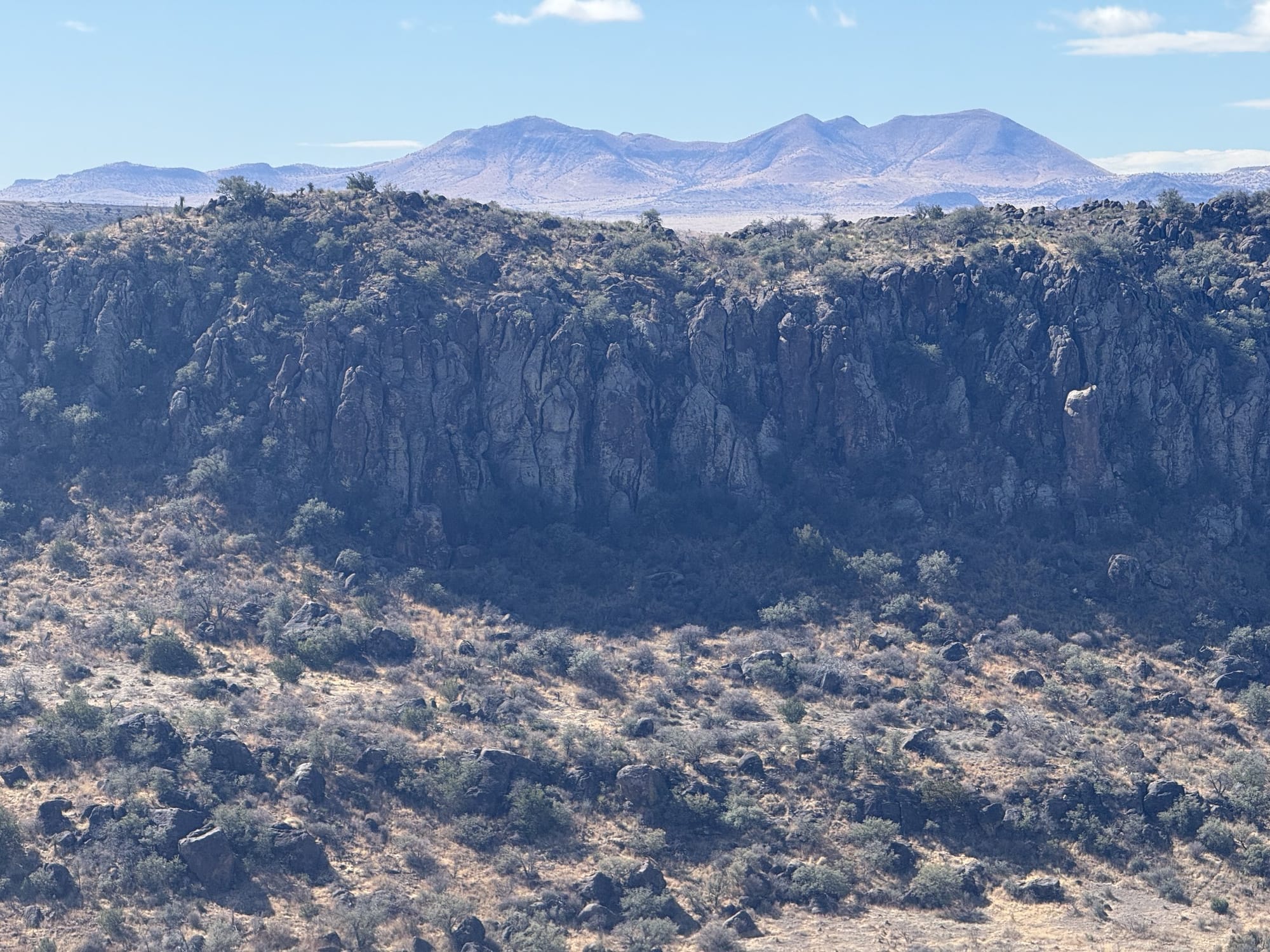
We hiked here on Valentine's Day, which turned out to be a perfect morning for it. The trails are accessible and the views from the higher elevations give you a real sense of the scale of the Chihuahuan Desert. The interpretive center was an unexpected highlight. We spent a good hour learning about the return of black bears to the Trans-Pecos region, which is a fascinating conservation story. Don't skip it.
Fort Davis National Historic Site
The following morning we hiked the national historic site. Fort Davis was one of the frontier forts established after the Civil War, and the grounds are well preserved. The parade grounds are flat and easy to walk, which works great with little kids. Ask about the Junior Ranger program at the visitor center if you're traveling with children.
Marfa
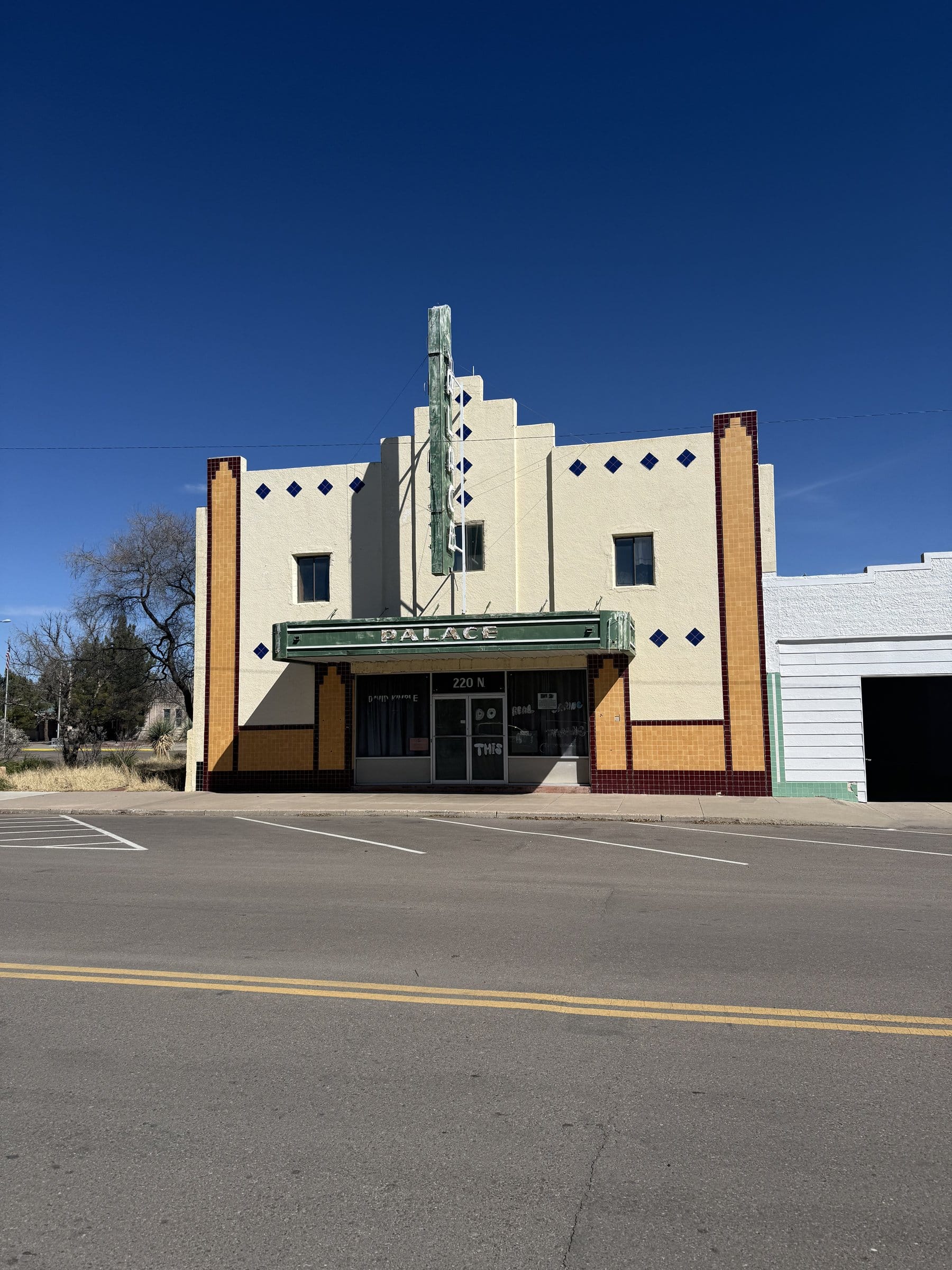
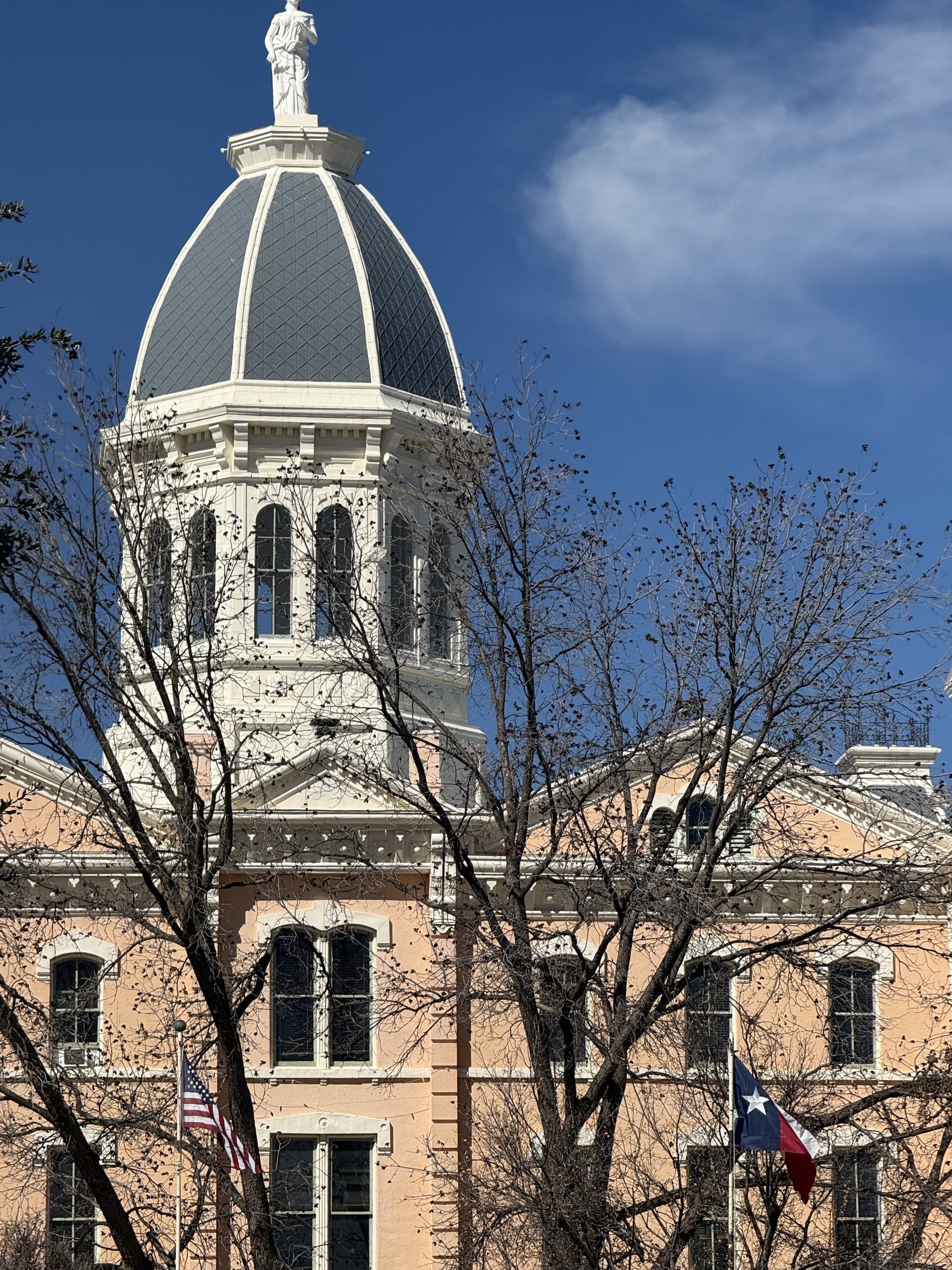
A few snaps from our stop in Marfa.
We drove out to Marfa for lunch, about 20 minutes from Fort Davis. We stopped at Maria's Burritos and grabbed coffee at The Sentinel. If you haven't been, Marfa has a reputation as an art destination and it earns it. Even a quick half-day trip is worth the detour.
The Town of Fort Davis
Fort Davis itself is small, but there's enough to poke around. If you're more of an outdoor person, the area around the state park has great camping options, and the RV hookups in the area actually give you more overnight charging flexibility than you might expect.
Practical Tips for EV Owners
- Leave Houston with at least 80-90%. You have plenty of range to reach San Antonio, but you want buffer for headwinds on I-10.
- Stay overnight in San Antonio and charge to 100%. This makes the second day of driving much less stressful. Even if you don't have charging at your hotel, San Antonio has plenty of fast charging options to get you enough juice to make it to Ozona or Fort Stockton.
- Ozona and Fort Stockton are your key charging stops before you get to Alpine. Don't skip them if you're below 50%.
- Alpine is your charging base near Fort Davis. The Tesla Supercharger is 30 minutes from Fort Davis. Plan a meal at one of the restaurants nearby or hangout at Skelton's Runway, the drive thru convenience store while you charge.
- Ask your accommodations about 240V. We had a 240V outlet at our place, which gave us a solid overnight charge. Even a slower charge overnight adds up meaningfully.
- Pack a NEMA 14-50 heavy duty extension cord. If you're relying on RV hookups or an outlet at your lodging, having your own cord gives you flexibility. We had our 240V charger but next time we're getting this extension cord from GearIT.
- Apps worth having: PlugShare for finding J1772 and NEMA outlets, the Rivian app for route planning, and ABRP (A Better Route Planner) if you want to stress-test your route before you leave.
Final Verdict: Is Fort Davis Worth It in an EV?
Absolutely, with the right expectations. This is not a plug in whenever you feel like it trip. You have to plan, and you have to be comfortable with the idea that Alpine is your charging hub and not Fort Davis itself. But none of that is a dealbreaker. The Rivian's range and the Supercharger network in Alpine made the whole thing work smoothly.
What made the Rivian a great fit here specifically is the combination of range and comfort on long highway stretches. West Texas rewards a quiet, capable vehicle, and having the truck's navigation handle the charging routing automatically meant we could just focus on the drive.
Would we do it again? Without question. Fort Davis scratched the itch I'd been carrying since the Stardust Big Bend trip fell through, and it left us wanting to go further next time. Big Bend, Terlingua, and the Chisos Mountains are all calling.
Have you taken your EV out to West Texas? Drop it in the comments. I'd love to know where you went and how you handled the charging.
What another perspective?
My friend Jimmy and I got our Rivians around the same time and both wanted to make the trip out to West Texas. He beat me to it, and made a video about it if you're interested!